Design for Your Life, Not Your Feed: A Practical Guide to a Home That Actually Works
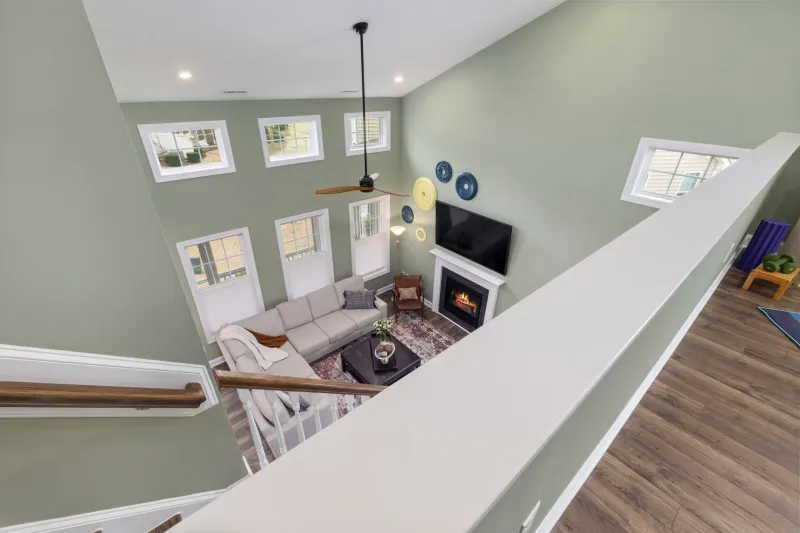
Let me paint you a picture. You spend a weekend rearranging your living room based on a layout you saw on Instagram. You source the exact linen throw, the specific ceramic vase, the just-right floor lamp. You photograph it at golden hour. It looks incredible. Then you sit down on your brand-new minimalist sofa — the one with the low profile and the firm cushions that looked so sleek in the post — and within twenty minutes, your back hurts and you've relocated to the floor.
This is the Instagram interior design trap, and a staggering number of American homes have fallen into it.
At Ashley Modern Furniture, we've talked with enough customers to know that the gap between a home that photographs beautifully and one that actually supports daily life can be enormous. This piece is about closing that gap — about making design decisions rooted in how you genuinely live rather than how you'd like to appear to live.
The Aspirational Design Problem
Social media platforms are optimization machines. They surface content that generates engagement, and in the home design space, that means images that are visually striking, uncluttered, and styled within an inch of their lives. What they don't show: the throw pillows that get tossed on the floor the moment anyone actually sits down. The dining table that's too small for a real family dinner. The open shelving that requires constant curation to avoid looking chaotic.
None of this is the fault of the designers or content creators sharing those images — they're doing their jobs beautifully. The problem is when viewers treat those images as blueprints rather than inspiration.
"There's a difference between a room that reads well in a photograph and a room that reads well in your life," notes one residential designer who works primarily with young families in the Chicago metro area. "Photography flattens space, removes noise, and cuts out context. It can't show you that the couch is actually uncomfortable, or that the layout makes it impossible to have a conversation."
The result, across thousands of American homes, is furniture and layouts that look right but feel wrong — spaces that create subtle, persistent friction with the way real people actually live.
What "Real Living" Actually Looks Like
Before you can design a home around your life, you have to be honest about what that life involves. This sounds obvious, but it runs counter to the aspirational instinct that drives most design decisions.
Here are some questions worth sitting with:
- How many people use your living room on a typical Tuesday evening — and what are they doing?
- Do you eat at your dining table regularly, or is it primarily a surface for mail and laptops?
- Does anyone in your household work from home, and if so, where does that actually happen?
- How often do you host, and how many people?
- Do you have kids, pets, or both — and what does that mean for fabric choices and furniture placement?
The answers to these questions should drive your furniture and layout decisions far more than any trend you've seen online. A household with two young kids and a dog has fundamentally different needs than a couple who works from home and hosts dinner parties on weekends. A great contemporary furniture collection can serve both — but only if the selections are made with the actual household in mind.
Case Study: The Living Room That Looked Perfect and Felt Terrible
Consider a scenario we hear variations of regularly: a homeowner in a mid-sized city — let's say Denver — renovated their living room with an eye toward the clean, neutral aesthetic dominating design feeds in 2022 and 2023. They chose a low-slung sectional in a light oatmeal boucle, a minimalist coffee table with a glass top, open shelving along one wall, and a single large area rug to anchor the space.
The room photographed beautifully. It also created immediate problems:
- The low sectional was uncomfortable for anyone over 5'8" and practically impossible for elderly relatives to get in and out of.
- The glass coffee table was a daily hazard with a toddler in the house.
- The open shelving required constant tidying and became a source of low-grade stress.
- The single rug didn't actually anchor the seating area correctly, leaving the layout feeling disconnected.
Within eighteen months, most of the furniture had been replaced or supplemented. The cost, in dollars and energy, was significant — and the original design decisions had been made almost entirely based on visual references rather than practical need.
This isn't a cautionary tale about bad taste. It's about the mismatch between aspiration and reality.
A Framework for Lifestyle-First Design
Here's a practical approach to making furniture and layout choices that serve your actual life:
Start with behavior, not aesthetics. Before looking at any furniture, map out how you use each room. Traffic patterns, primary activities, frequency of use. This becomes your functional brief — the non-negotiable requirements any furniture choice has to meet before aesthetics even enter the conversation.
Test comfort in person whenever possible. Sit on the sofa. Sit at the dining chairs for longer than feels necessary. Open the drawers. Check the table height. Contemporary furniture showrooms exist precisely for this purpose — use them. A piece you've spent twenty minutes with in person is a far safer investment than one you've only seen on a screen.
Prioritize adaptability over perfection. Your life will change. Furniture that works with multiple layouts, accommodates different configurations, or transitions between rooms gives you flexibility that hyper-specific, trend-driven pieces rarely do. Modular shelving, sectionals with moveable components, and dining tables with leaf extensions all offer this kind of built-in adaptability.
Give yourself permission to be specific. If you read in your living room every night, you need excellent task lighting and a seat with real back support. If you cook elaborate meals on weekends, your dining table needs to be large enough to actually serve food. These specifics are not limitations — they're design parameters, and good design works within them.
Separate inspiration from instruction. By all means, follow the accounts and save the images that excite you. But treat them as a mood board rather than a shopping list. Extract the principles — the color palette, the balance of texture, the sense of openness — and apply them to your actual space and actual needs.
Resisting the Refresh Cycle
One of the more insidious effects of social media design culture is the pressure to keep updating. Trends cycle faster than ever, and the implicit message is that a home should reflect what's current rather than what's enduring.
Contemporary design, at its best, pushes back against this. The principles that define modern furniture — functional form, quality materials, clean lines that don't rely on ornamentation — are not trend-dependent. A well-chosen contemporary piece doesn't become dated the way a heavily trend-driven one does. It evolves with your space rather than fighting against it.
The goal isn't a home that looks like it belongs on a feed. It's a home that makes you feel good to walk into at the end of a long day — one that fits your routines, supports your relationships, and reflects who you actually are rather than who you'd like to seem to be.
That's a harder thing to photograph. But it's a much better thing to live in.