Keep It, Fix It, or Let It Go? How to Make the Right Call on Every Piece of Furniture You Own
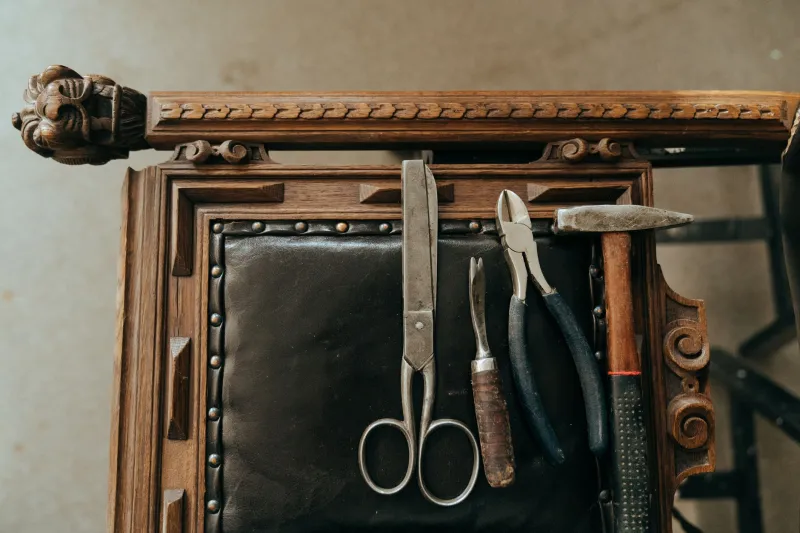
That Chair Has Seen Better Days. Now What?
We've all been there. You're staring at a piece of furniture that's been with you through three apartments, two roommates, and one questionable decorating phase. It's got a scratch here, a sagging cushion there, and honestly — the color hasn't been working for a while. But getting rid of it feels wasteful, and fixing it feels expensive.
So what do you actually do?
The answer isn't always obvious, and it's rarely emotional. Making a smart call on aging furniture comes down to three things: the structural integrity of the piece, the realistic cost of restoration, and whether it genuinely fits the life you're living right now. Let's break all of that down.
Start With the Bones
Before you call an upholsterer or scroll through new sofas, you need to check the foundation of the piece. Good furniture — especially anything solid wood or hardwood-framed — can last for decades with the right care. That's the first question to ask: is the frame still solid?
Give the piece a gentle shake. Sit in it, lean against it, push on the arms. If there's significant wobble coming from the joints rather than just a loose leg, that's a warning sign. A loose leg is often a quick, cheap fix — a little wood glue and a clamp, and you're done. But if the frame itself is compromised, cracked, or warped, restoration gets complicated fast.
For case goods — dressers, coffee tables, bookshelves — check for drawer slides that no longer function, veneer that's bubbling or peeling at the edges, and any signs of water damage that have caused the wood to swell or warp. Surface damage is almost always fixable. Structural damage is a different conversation.
The rule of thumb: If the bones are good, restoration is worth considering. If the structure is compromised, you're likely throwing money at a problem that won't fully resolve.
The Real Math on Reupholstering
Reupholstering is one of those things that sounds like a smart, sustainable move — and sometimes it genuinely is. But the numbers have to make sense.
Professional reupholstering in the US typically runs anywhere from $500 to $1,500+ for a standard sofa, depending on your location, the complexity of the piece, and your fabric choice. For a quality armchair, expect $300 to $800. That's a significant investment, and it only makes financial sense if the piece you're restoring would cost more to replace at the same quality level.
Here's the honest question to ask yourself: if you bought this piece brand new today, would you spend $1,200 on it? If the answer is yes — if it's a well-constructed piece with a solid frame, good proportions, and real staying power — then reupholstering is a legitimate investment. You're essentially getting a new piece of furniture for the price of new fabric and labor.
If the piece was a budget buy to begin with, the math rarely works out. Spending $700 to restore a $400 sofa doesn't make financial sense, no matter how attached you are to it.
Fabric choice also matters here. If you're going to put money into reupholstering, choose a durable, high-performance fabric — something with a strong rub count (look for 30,000+ double rubs for everyday furniture) that won't wear out in another few years. This is where you invest in quality so the restoration actually lasts.
When a Quick Repair Is All You Need
Not every furniture problem requires a major intervention. Some of the most common issues are surprisingly easy and inexpensive to address:
- Loose joints and wobbly legs: Wood glue, corner brackets, or simple hardware tightening can resolve most of these in an afternoon.
- Surface scratches on wood: Furniture markers, touch-up pens, or even a walnut rubbed directly on a scratch can do more than you'd expect.
- Sagging cushions: Replacement foam inserts are widely available online and can transform a tired sofa without touching the upholstery.
- Broken drawer hardware: Knobs, pulls, and drawer slides are cheap to replace and can give a dated piece a surprisingly fresh look.
- Stained upholstery: Before writing off a piece, try a professional cleaning service. You might be shocked by the results.
If the issue falls into any of these categories, repair is almost always the right call. You're preserving a functional piece at minimal cost.
Signs It's Actually Time to Move On
Sometimes — despite your best efforts and genuine affection for a piece — retirement is the right answer. Here's how to recognize that moment without guilt.
The repair cost exceeds replacement value. If you've gotten quotes and the restoration cost is anywhere close to what you'd spend on a quality replacement, let it go. Your money is better spent on something that starts fresh.
The piece no longer fits your space or lifestyle. Maybe you moved into a smaller apartment and the oversized sectional just doesn't work anymore. Maybe your style has genuinely evolved and the piece fights with everything else in the room. Furniture should serve your life — not the other way around.
The damage is beyond cosmetic. Mold, deep water damage, broken frames, or upholstery that's degraded at the foam level aren't worth the investment. These issues don't just affect aesthetics — they can affect air quality and comfort in your home.
You've been keeping it out of obligation. If the honest answer to "do I love this piece?" is "no, but I feel bad getting rid of it" — that's a signal. Your home should be filled with things you actually want there.
Making the Transition Feel Intentional
When you do decide to retire a piece, try to do it thoughtfully. Donate to local organizations, list it on Facebook Marketplace or Craigslist, or offer it to friends before it goes to the curb. Good furniture can have a second life somewhere else, and that's a much better outcome than landfill.
And when you're ready to replace it, think longer-term than you might have before. The furniture that lasts — the stuff that never needs a hard conversation about repair or retirement — tends to be built with quality materials, solid frames, and timeless design. It costs more upfront, but the math is almost always better over time.
Your home is a living space, and the furniture in it should be working for you. Some pieces earn a second chance. Others have simply done their job. Knowing the difference isn't just practical — it's how you build a home that keeps getting better.