Pass It On: How Swapping Furniture With Your Circle Is the Freshest Design Hack Around
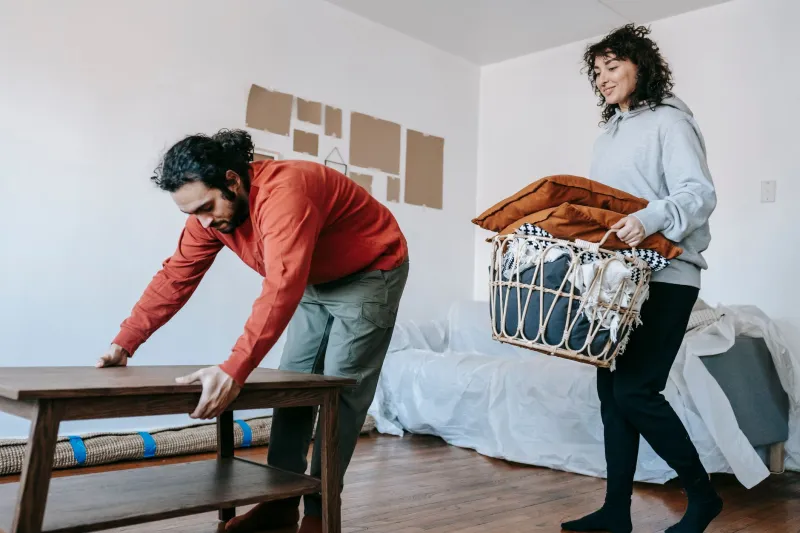
There's a moment most of us know well. You walk into a friend's apartment, spot a side table or a reading chair tucked in the corner, and think — that would look incredible in my place. You compliment them on it, they shrug and say they've been thinking about swapping it out anyway, and then... nothing happens. The conversation moves on, the table stays put, and you go home to the same room you've been staring at for two years.
Here's the thing: that moment is actually an opportunity. Furniture swapping — the informal, low-cost, surprisingly fun practice of trading pieces with friends, neighbors, and community members — is one of the most underrated design moves out there. It's not a new concept, but it's having a quiet renaissance, and for good reason.
Why Your Friend's Old Sofa Might Be Your New Favorite Piece
Let's start with the psychology, because it's genuinely fascinating. Interior designers have long noted that pieces acquired through personal connections carry a different kind of energy than things bought off a showroom floor. When you know the story behind a lamp or a bookshelf — when you can picture it in someone else's home, understand how it lived — it arrives in your space with context. That context makes it feel curated rather than purchased.
There's also a phenomenon some designers call "fresh eyes" syndrome. A piece that felt tired or mismatched in one environment can suddenly feel completely at home in another. Different wall colors, different floor materials, different natural light — all of it transforms how furniture reads. Your neighbor's navy velvet accent chair might have looked like too much in her minimalist loft, but against your warm-toned gallery wall? It becomes the focal point you've been searching for.
Beyond aesthetics, there's a real emotional component at play. Living with something that belongs to someone you care about creates a low-key sense of connection. It's a bit like wearing a borrowed sweater — there's warmth in it that goes beyond the fabric.
The Practical Side: Making a Swap Actually Work
Romantic notions aside, furniture swapping does require some legwork. Here's how to make the process smooth rather than stressful.
Measure everything twice. This sounds obvious, but it's the step most people skip. Before you get excited about a dining table or a sectional, pull out the tape measure. Know your room dimensions, your doorframe clearances, and your hallway widths. A piece that's three inches too wide for your entryway is a beautiful problem you don't need.
Be honest about style compatibility. Not every swap is going to work aesthetically, and that's okay. If your home leans toward clean-lined contemporary pieces and your friend is offering a heavily ornate armoire, be realistic. Swaps work best when there's some visual overlap — shared tones, complementary materials, or a silhouette that bridges both styles. That said, don't be too rigid. Sometimes the unexpected contrast is exactly what a room needs.
Sort out transportation upfront. This is where swaps can get complicated. Renting a pickup truck for an afternoon from a service like Home Depot or U-Haul is usually affordable and makes the whole thing infinitely easier. If you're swapping something large, recruit a third person to help — it's safer, faster, and honestly more fun.
Set clear expectations. Is this a permanent trade, or more of a long-term loan? Are you exchanging pieces of roughly equal value, or is one person just giving something away? Having a quick, honest conversation about this upfront keeps friendships intact and avoids awkward situations down the line.
Building a Swap Network That Actually Delivers
One-off trades are great, but the real magic happens when you build a small community around the idea. Think of it as a rotating design library.
Start with your existing social circle — text a few friends and float the idea. You might be surprised how many people have pieces they're ready to move on from but haven't gotten around to listing on Marketplace. From there, neighborhood Facebook groups, local Buy Nothing communities, and even apartment building group chats can expand your network quickly.
Some cities have started hosting formal furniture swap events — think clothing swap but for home goods — where participants bring pieces, browse what others have brought, and leave with something new. If your area doesn't have one yet, hosting a casual version in a backyard or community space is a genuinely fun afternoon activity.
The key is keeping the vibe low-pressure. Not every swap has to be a perfect one-for-one exchange. Sometimes someone gifts a piece because they're moving, and you pay it forward later. The generosity tends to circulate.
When a Swap Doesn't Quite Work — And What to Do About It
Not every traded piece is going to be a home run. Sometimes you bring something home, live with it for a week, and realize it's just not clicking. That's not a failure — it's information.
Before you give up on a piece, try moving it to a different room or reorienting it in the space. A dresser that felt awkward in the bedroom might be perfect as a media console in the living room. A coffee table that seemed too large in one configuration might anchor the space beautifully once you rearrange the seating.
If it's truly not working, that's what the network is for. Pass it along to someone else in your circle, or donate it to a local thrift store. The whole point is to keep things moving rather than accumulating.
The Bigger Picture: Design That Means Something
At Ashley Modern Furniture, we obviously love a well-chosen new piece — there's nothing quite like bringing home something that's exactly right for your space. But we also believe that great design isn't just about what you buy. It's about how you think about your home, how you engage with the people around you, and how you build a space that reflects who you actually are.
Furniture swapping fits beautifully into that philosophy. It encourages you to see your home as a living, evolving thing rather than a finished product. It builds relationships. It keeps perfectly good pieces out of landfills. And it has a way of introducing you to design directions you never would have discovered on your own.
So the next time you're scrolling through your phone wishing your living room felt different, consider sending a text before you add anything to your cart. The piece you're looking for might already exist — it's just waiting in someone else's home to find its way to yours.