One New Piece, One Giant Domino Effect: What Really Happens When You Refresh a Single Furniture Item
It Starts With One Decision
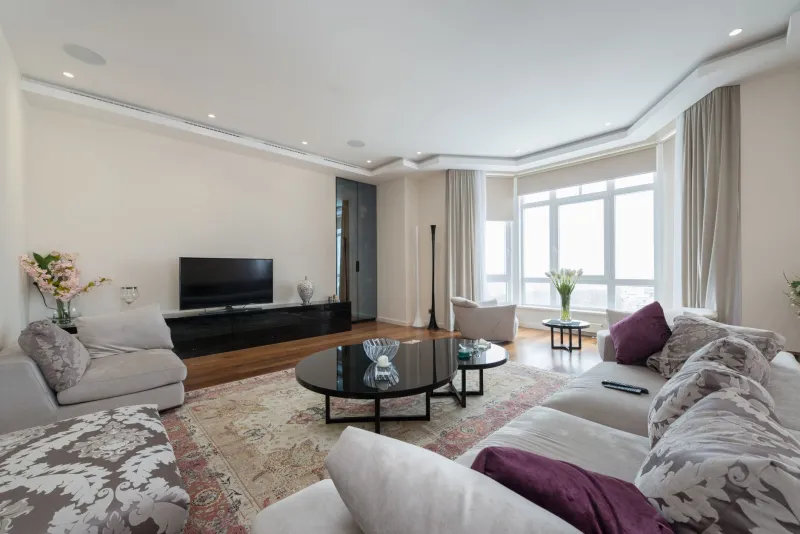
You've been eyeing that sleek, low-profile sectional for months. Finally, you pull the trigger. It arrives, you get it set up, and for about twenty minutes, life is perfect. Then you look up. The old coffee table suddenly seems clunky. The rug pattern feels busy and disconnected. The wall art you've had since your first apartment? Completely wrong. And the throw pillows — don't even get started on the throw pillows.
Welcome to what designers quietly refer to as the refresh paradox. You changed one thing, and now everything else is demanding a conversation.
This isn't a design flaw or a sign that you made a bad purchase. It's actually a completely predictable psychological and aesthetic response — and understanding it can save you from either spending money impulsively or giving up on a space that has real potential.
Why One Piece Disrupts the Whole Room
Your room, whether you planned it deliberately or not, has a visual language. Every piece communicates with every other piece through scale, color temperature, material texture, and stylistic era. When everything arrived in your home gradually — maybe over years — each addition got absorbed into a loosely agreed-upon aesthetic. The room found its equilibrium, even if it wasn't exactly the look you dreamed of.
Now you've introduced something new. Something intentional. Something that actually reflects who you are today rather than who you were when you furnished the place. And that new piece is fluent in a different visual dialect.
The contrast isn't imaginary — it's real. Psychologically, our brains are wired to notice inconsistency. A sleek, contemporary piece with clean lines and a matte finish draws attention to everything around it that doesn't share those qualities. Suddenly the ornate lamp base looks fussy. The heavy wooden entertainment center reads as dated. The room hasn't gotten worse; your eye has simply gotten more precise.
The Ripple Effect Is Actually Good News
Here's the reframe worth holding onto: the discomfort you're feeling is a signal, not a mistake. It means your taste has sharpened, your new piece has genuine visual presence, and your space is asking for a more cohesive identity.
A lot of people panic at this stage. They either rush out and buy a bunch of things to "fix" the imbalance, or they return the original new piece to restore the old equilibrium. Neither approach actually improves the room — one leads to chaotic overspending, the other leads back to a space you were already bored with.
The smarter move is to pause and treat the disruption as an invitation.
How to Work With the Ripple, Not Against It
Start by identifying your anchor piece. In most living rooms, this is the sofa. In a bedroom, it's the bed frame. In a dining area, it's the table. Whatever you just changed — or are considering changing — that piece sets the tone for everything else. Get clear on what it's communicating: its finish, its silhouette, its material story. That becomes your design brief.
Audit, don't replace. Before you buy anything else, walk through the room and categorize every existing piece. Some things will naturally align with your new anchor — keep those. Some will feel obviously out of place — those are your candidates for eventual replacement. And some pieces might just need minor updates: a new cushion cover, a different placement, a coat of paint on a side table. You'd be surprised how many "problem" items can be rehabilitated rather than replaced.
Build a transition plan instead of a shopping list. The mistake most people make is treating the refresh as a single event rather than a sequence. Give yourself a realistic timeline — maybe three to six months — and decide on a priority order. What's most visible? What's most jarring? What can wait? This approach keeps your budget in check and your decision-making intentional.
Use color as your connective tissue. Even when pieces differ in style or era, a shared color story can pull a room together. If your new piece has a warm walnut finish, pull that warm tone into a new rug or accent cushions. If it's a cool, slate-toned upholstery, echo that in your lighting or art. Color repetition is one of the fastest ways to make a room feel like it was designed rather than collected.
The Statement Piece Trap
There's a particular version of the refresh paradox that catches people off guard: buying something specifically designed to be a statement. A bold accent chair. A sculptural floor lamp. A dramatically oversized piece of art. These items are meant to stand out — that's the whole point. But "standing out" only works when the rest of the room provides a stable, considered backdrop.
A statement piece in a visually cluttered or stylistically inconsistent room doesn't read as bold — it reads as confused. For a statement to land, the room has to be quiet enough to let it speak.
This is why some of the most effective design moves involve editing down before adding anything new. Clear out the visual noise. Streamline what's already there. Then introduce the statement piece into a room that's ready to receive it.
When the Domino Effect Is Worth Following All the Way
Sometimes, the ripple effect is telling you something bigger: the room was never really working, and one honest new piece has finally made that clear. If you find yourself looking around and feeling like almost nothing belongs anymore, that's not a crisis — that's clarity.
In those moments, the most practical thing you can do is treat the room as a design project rather than a patchwork problem. Start with a clear vision of how you want the space to feel — relaxed and open, sophisticated and minimal, warm and layered — and use that feeling as your filter for every decision going forward.
At Ashley Modern Furniture, we see this all the time. Someone comes in for a replacement coffee table and leaves with a new understanding of their entire living room. That's not upselling — that's what happens when good design thinking gets activated. One honest, well-chosen piece has a way of raising the bar for everything around it.
Give the Change Time to Breathe
Before you do anything else after a furniture refresh, give yourself a week or two just to live with the new dynamic. Let your eye adjust. Notice what genuinely bothers you versus what just feels unfamiliar. Sleep on the big decisions. The urgency you feel in those first few days is real, but it's also a little unreliable.
The goal isn't a perfectly coordinated showroom. It's a home that feels intentional, functional, and genuinely yours. Sometimes that takes a single inspired piece to get the ball rolling — and a little patience to let the rest fall into place.