How You Arrange Your Sofa Changes Every Conversation You'll Ever Have at Home
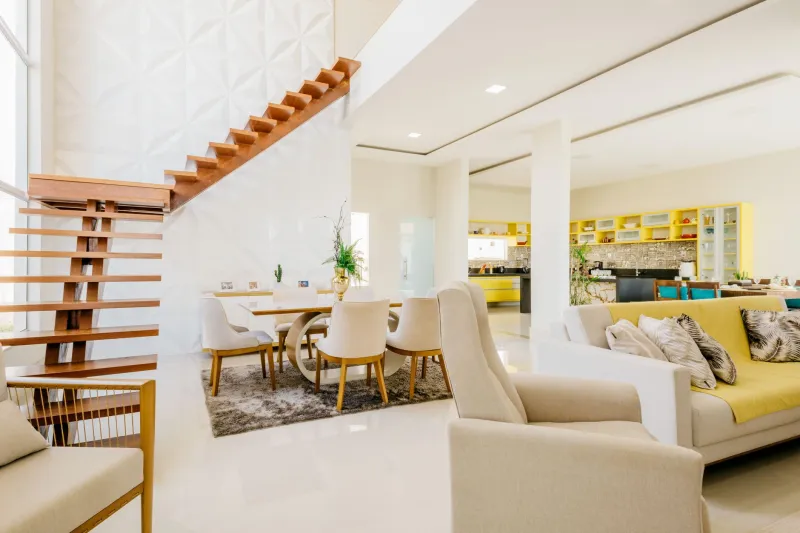
Most of us spend a lot of time picking the right sofa — the fabric, the color, the cushion depth. And then we push it against the wall and call it a day. It's one of the most common furniture mistakes in American homes, and honestly, it's completely understandable. Wall-hugging feels safe. It opens up floor space. It makes the room look bigger at first glance.
But here's the thing: where you put your sofa — and how it relates to every other seat in the room — is doing something much bigger than filling square footage. It's setting the stage for every interaction that happens in that space. It's telling your guests whether they're welcome to linger or expected to keep things brief. It's telling you whether this room is a place to recharge or a place to perform.
That's not an exaggeration. That's spatial psychology, and it's worth paying attention to.
The Wall Problem Nobody Talks About
Pushing a sofa flush against the wall creates distance — literal, measurable distance — between the people sitting on it and anyone sitting across from them. In a standard living room, that can mean six, eight, even ten feet of open floor between two people trying to have a conversation. At that range, you're practically shouting. Eye contact becomes effortful. The whole dynamic shifts from intimate to transactional.
Interior designers and environmental psychologists have long noted that conversational comfort peaks when seating is arranged within roughly four to eight feet of each other. Close enough to feel connected, far enough to avoid crowding. When furniture is too spread out, people tend to raise their voices, lean forward awkwardly, or just... stop talking as much.
So if your living room has been feeling a little flat lately — like people drift in, check their phones, and drift out — your layout might be the culprit, not your guest list.
Float Your Furniture and Watch What Happens
The single most transformative thing you can do with a contemporary sofa is pull it away from the wall. Even six inches makes a psychological difference. A foot or two creates a genuinely new spatial relationship.
When you float a sofa into the room and anchor it with a rug, you're defining a zone — a deliberate gathering space that says this is where we sit together. Pair it with a loveseat or two accent chairs angled inward, and you've created what designers sometimes call a conversation grouping. It's intentional. It's welcoming. And it works.
Modern sectionals are particularly good at this. An L-shaped or U-shaped configuration naturally wraps people into a shared space, creating soft visual boundaries that feel cozy without being claustrophobic. If you've got a larger living room or an open-plan layout, a well-placed sectional can do the work of three separate pieces while keeping everything cohesive.
Not Every Household Needs the Same Setup
Here's where it gets personal: the "ideal" furniture arrangement is entirely dependent on how you actually live.
A young couple who hosts dinner parties every weekend has completely different spatial needs than a family of five with kids who need room to sprawl on the floor. A remote worker who uses the living room as a secondary office needs different energy than a retiree who wants a calm, meditative space to read in the evenings.
Think about the rhythms of your household before you commit to any arrangement. Ask yourself:
- Do you want the TV to be a focal point, or a secondary feature? Orienting everything toward the screen discourages conversation. Angling seating slightly away from it — while still keeping the screen visible — subtly shifts the room's priority toward people.
- Do you need zones within a single space? In open-plan homes especially, a sofa's back can act as a soft room divider, separating a conversation area from a dining zone without a single wall.
- Is anyone in your home an introvert who needs a retreat corner? Not every seat needs to face inward. A single chair angled toward a window or bookshelf creates a natural solitude spot — a place to exist in the same room as others without being in the group.
The Emotional Weight of Facing Each Other
There's something almost vulnerable about furniture that forces eye contact. Sofas and chairs arranged face-to-face — even with a coffee table between them — create a dynamic that feels more honest, more open. It's the same reason therapists use chairs instead of couches, and why the best kitchen table conversations happen when nobody's sitting side by side staring at a wall.
If you want your home to be a place where real conversations happen, design for eye contact. Angle your chairs. Keep the coffee table low enough that it doesn't become a visual barrier. Choose a sofa depth that lets people sit upright comfortably rather than sinking so far back they're practically lying down.
Conversely, if you're designing a bedroom sitting area or a reading nook, parallel or side-by-side seating actually works in your favor. Those spaces aren't meant for intense dialogue — they're meant for quiet coexistence, the kind of comfortable silence that only happens when people feel truly at ease with each other.
Contemporary Furniture Makes This Easier
One of the underappreciated advantages of modern furniture design is its flexibility. Clean lines, modular configurations, and neutral palettes make it easier to rearrange without the whole room feeling like it's fighting itself.
A contemporary sofa in a warm greige or deep slate doesn't demand a specific wall. It works in the center of the room just as well as along a window. Modular sectionals let you reconfigure for a Super Bowl watch party on Sunday and a quiet weeknight in on Tuesday. Accent chairs with slim profiles can be pulled in or pushed aside without disrupting the visual flow.
That adaptability isn't just convenient — it's freeing. It means your furniture works for your life rather than dictating the terms of it.
Start With One Small Shift
You don't need to overhaul your entire living room to start feeling the difference. Pull your sofa six inches off the wall. Angle one chair inward. Drop a rug down to define the grouping. See how the room feels after a week.
Chances are, you'll notice something change — not just in how the space looks, but in how it functions. Conversations might get a little easier. People might linger a little longer. The room might finally start to feel like the gathering place you always wanted it to be.
That's the quiet power of intentional furniture placement. It's not magic — it's just design doing what it's supposed to do.