Saying No Is a Design Strategy: The Case for Intentional Living Over Impulse Buying
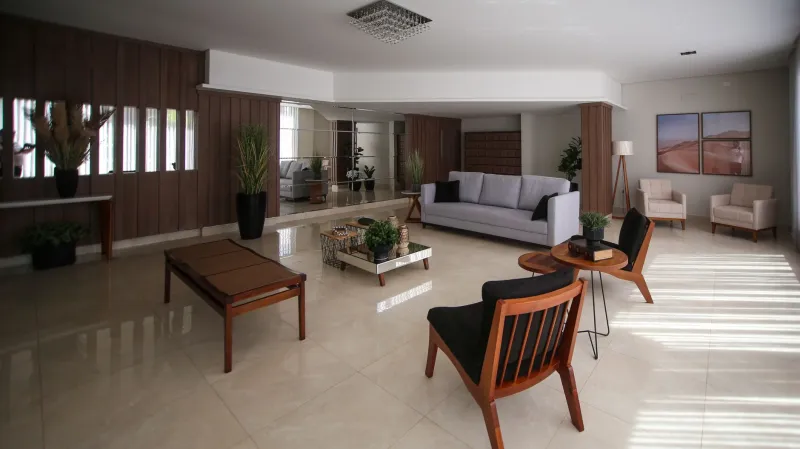
Here's something nobody in the furniture world really wants to say out loud: the best thing you can do for your home might be to walk away from the store empty-handed.
We live in a world that rewards acquisition. Flash sales. Limited-time drops. That viral sideboard everyone on Instagram seems to own right now. The message is constant — buy more, refresh faster, stay current. And yet, some of the most beautiful, coherent, genuinely livable homes you've ever stepped into? They weren't built by people who bought everything. They were built by people who were ruthless about what they let in.
This is a manifesto for that kind of restraint. Not deprivation. Not minimalism for minimalism's sake. Just the radical idea that saying no is one of the most powerful design decisions you'll ever make.
The Real Cost of the Impulse Buy
Let's be honest about what impulse decorating actually costs. There's the obvious financial hit — that $400 accent chair you bought because it was 60% off and looked incredible in a flat-lay photo. But there's also the subtler toll: the visual noise, the low-grade guilt of owning something that doesn't quite fit, the mental energy spent figuring out where to put the thing.
Clutter isn't just physical. It's psychological. Every object in your home is making a quiet demand on your attention, asking you to contextualize it, justify it, work around it. When your space is filled with pieces that don't really belong — that were bought on a whim, or because they were on sale, or because someone you follow online had one — your home stops feeling like yours. It starts feeling like a storage unit with better lighting.
The furniture you didn't think hard about becomes the furniture you resent.
Trends Are Designed to Expire
Social media has done something genuinely strange to interior design. Aesthetics cycle faster than ever — cottagecore gives way to quiet luxury gives way to whatever's coming next — and there's always pressure to keep up. Retailers (yes, including furniture retailers) benefit from that churn. New collections, new colorways, new "must-haves" every season.
But here's the thing: trends are designed to expire. That's literally the point. The moment a look becomes ubiquitous, it starts feeling dated. If you're buying furniture to chase a trend, you're always going to be a step behind — and your home is going to show it.
The pieces that hold up over time, the ones that still look right in your space five or ten years later, are rarely the trendy ones. They're the pieces you chose because they made sense for your life — your actual square footage, your real daily habits, the colors and textures that genuinely calm or energize you. That kind of intentionality doesn't go out of style.
What 'No' Actually Sounds Like in Practice
Saying no to impulse decorating doesn't mean you stop shopping or stop being excited by beautiful things. It means building a filter — a set of questions you run every potential purchase through before it crosses your threshold.
Some useful ones:
- Does this solve a real problem, or does it just look good in a photo? A stunning coffee table that's the wrong height for your sofa is just an expensive inconvenience.
- Can I picture exactly where this goes? If you can't visualize the specific wall, corner, or room it belongs in, that's a sign.
- Am I buying this because I love it, or because I love the idea of it? There's a difference between a piece that fits your life and a piece that fits the life you imagine having.
- Would I still want this in six months? If the honest answer is "probably not," trust that instinct.
- Does it work with what I already own? Cohesion isn't about matching — it's about pieces that belong in the same conversation.
These aren't meant to kill the joy of shopping. They're meant to protect it. When you buy less, each purchase carries more meaning. The pieces you do bring home feel chosen, not just accumulated.
The Freedom That Comes With Fewer, Better Choices
There's a kind of financial freedom that comes with intentional decorating that's hard to quantify until you experience it. When you stop buying things impulsively, you start saving — not just money, but bandwidth. You stop spending weekends rearranging rooms trying to make things work. You stop feeling vague guilt about that lamp you never really liked. You stop chasing a vision of your home that keeps shifting because it's based on external input rather than internal clarity.
And when you do decide to invest in a piece — a real, considered, this-is-exactly-right investment — you can actually afford to do it well. That's when quality enters the picture. Not as a luxury, but as a natural outcome of buying less and buying better.
A well-made sofa that you genuinely love, positioned exactly where it should be in a room that isn't fighting for attention with seventeen other things? That's not minimalism. That's confidence.
Your Home Should Reflect You, Not the Algorithm
At the end of the day, this is what intentional decorating is really about: building a home that reflects who you actually are, not who the internet thinks you should be.
Your space is one of the few places in your life where you have total creative authority. You get to decide what comes in. You get to decide what stays. Nobody else's aesthetic has to live there — just yours.
That means the most important design tool you have isn't a mood board or a shopping cart. It's discernment. The ability to look at something beautiful and still say, "That's not for me." To walk past a sale and feel good about it. To let a trend pass without chasing it.
The furniture you don't buy is doing real work in your home. It's preserving space — literal and psychological — for the things that genuinely belong. It's keeping your rooms from becoming crowded with other people's ideas about what a nice home looks like.
So the next time you're about to add something to your cart at midnight because it popped up in your feed and it's only available for the next 12 hours — pause. Ask yourself if you actually want it, or if you've just been convinced that you should.
Sometimes the most powerful thing you can do for your home is close the tab.