The Storage Trap: How Too Many Cabinets Are Quietly Shrinking Your Living Space
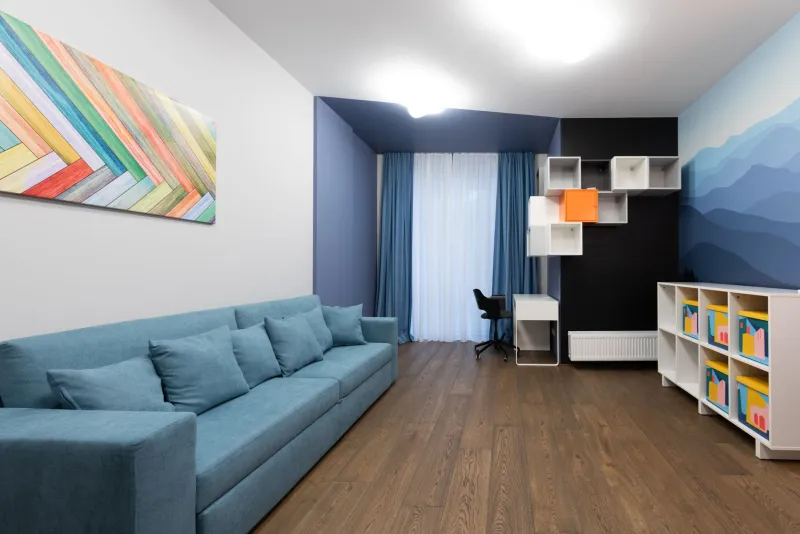
Here's a scenario a lot of us know too well. You buy a new storage cabinet — maybe a big, solid bookcase or a chunky media console — because things are piling up and you need somewhere to put them. For about a week, the room feels organized. Then something weird happens. The space starts to feel... smaller. Heavier. Like the walls moved in a little.
You didn't imagine it. That's a real phenomenon, and it has everything to do with how storage furniture interacts with the visual and psychological experience of a room. More storage doesn't automatically equal more space. In fact, it can do the exact opposite.
Why Your Brain Reads Furniture as Physical Mass
When you walk into a room, your brain isn't just registering square footage. It's scanning for visual weight — how much of the room is taken up by solid, opaque objects versus open, light, or reflective surfaces. Big, closed storage pieces like tall wardrobes, bulky entertainment centers, or wall-to-wall shelving units register as mass. Even if they're technically organized, your brain still clocks them as stuff filling the room.
This is why two rooms with identical square footage can feel completely different. One might have a single floating shelf and a sleek sideboard, while the other is lined with floor-to-ceiling cabinets. The second room has more storage capacity — but it almost certainly feels smaller.
The type, height, and visual density of your storage pieces matters enormously. And most people never think about any of that when they're shopping.
The Height Problem Nobody Talks About
Tall furniture is one of the fastest ways to compress a room. When a bookcase or wardrobe pushes toward the ceiling, it draws the eye upward — but not in a good way. Instead of making the ceiling feel high, it makes the walls feel close. The room starts to feel boxed in.
There's a reason so many contemporary designers favor low-profile storage. A long, low media unit or a streamlined credenza keeps the sightlines open. Your eye travels across the piece and then continues into the room, picking up on the space beyond it. That horizontal movement tricks the brain into perceiving more square footage than is actually there.
If you've got a room that already feels tight, the worst thing you can do is stack tall storage along multiple walls. Go low and wide instead. You'll likely end up with less total storage volume, but the room will feel noticeably more open — and that's a trade worth making.
Open vs. Closed: The Visual Breathing Room Factor
Closed cabinets hide clutter, which sounds great. But they also create solid visual barriers that stop the eye cold. Open shelving, by contrast, lets light and sightlines pass through — or at least gives the impression of doing so.
The trick is balance. A storage piece that's entirely open can feel chaotic if what's on the shelves isn't curated. A piece that's entirely closed can feel like a wall. The sweet spot for most modern homes is a combination: closed storage at the bottom for the practical stuff (cables, paperwork, random things you don't want to look at), and open shelving above for a few well-chosen objects, plants, or books.
This approach gives the upper portion of the piece visual lightness, which keeps the room from feeling like it's closing in on you.
Placement Is Doing More Work Than You Think
Where you put your storage furniture is just as important as what you choose. A large cabinet placed perpendicular to a wall — jutting into the room — immediately breaks up the floor plan and creates dead zones. Pushed flat against a wall, that same piece becomes far less intrusive.
Corner placement is another underutilized strategy. A corner unit tucks storage into a space that often goes wasted anyway, and it keeps the main traffic paths open. The room retains its flow, and you still get the storage you need.
Also worth thinking about: don't cluster all your storage on one wall. Distributing it around the room — a sideboard here, a floating shelf there — prevents any single area from feeling overwhelmed. It also gives the eye multiple places to rest, which makes the overall space feel more balanced and, yes, larger.
The Case for Furniture That Does Double Duty
One of the smartest moves in modern design is choosing pieces that serve more than one purpose without advertising it. An ottoman with interior storage. A bed frame with built-in drawers. A coffee table with a hidden shelf or lift-top. These pieces handle your storage needs without adding any extra visual mass to the room.
Because here's the thing — every additional piece of furniture you bring in adds to the visual load of a space, even if it's small. A room with five pieces of furniture will almost always feel more open than a room with eight, even if the five pieces are technically larger. Fewer, smarter pieces beat more, bulkier ones every single time.
Material and Finish Matter More Than You'd Expect
A dark, matte wood cabinet absorbs light and reads as heavy. A piece in a lighter finish — natural oak, pale walnut, white lacquer — reflects more light and feels less imposing. Mirrored or glass-front cabinet doors can actually expand the sense of space by bouncing light around the room.
Metal legs are another underrated tool. A storage credenza that sits directly on the floor creates a solid visual base that anchors it — and not always in a good way. Lift that same piece onto slim metal legs and suddenly there's visible floor space beneath it. The room looks bigger because your eye can see more of the floor, which reads as open space.
These details might seem minor, but they add up fast. The difference between a room that feels open and one that feels crowded often comes down to a handful of choices like these.
Rethinking What You Actually Need to Store
Here's the uncomfortable truth that sits underneath all of this: sometimes the storage problem isn't a furniture problem. It's a stuff problem. If you're constantly running out of storage, the question worth asking is whether you actually need more places to put things — or fewer things to put away.
Contemporary design tends to favor intentionality. Not minimalism for its own sake, but a deliberate approach to what you keep and where it lives. When you're selective about what comes into your home, you need less storage. And when you need less storage, you can choose pieces that are genuinely beautiful rather than just functional. That's when a room really starts to feel like something.
The goal isn't to find more space for everything you own. It's to create a home where the things you love have room to breathe — and so do you.